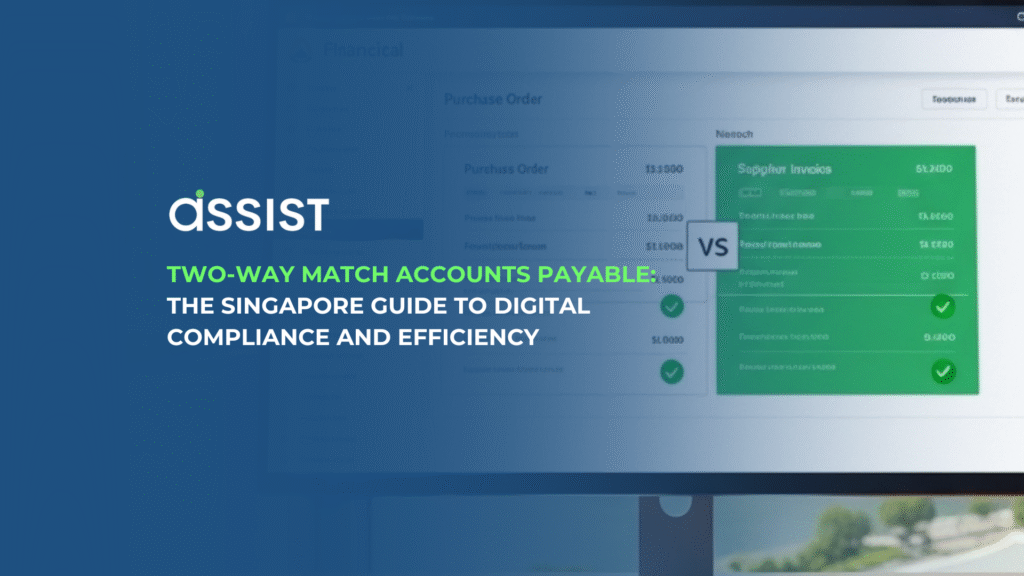

Two-way matching is a foundational financial control in accounts payable where a supplier invoice is verified against a purchase order to ensure that prices, quantities, and terms are accurate before payment is processed. For businesses in Singapore, this process is now a strategic necessity due to the upcoming IRAS GST InvoiceNow mandate starting in 2025, which requires the digital transmission of invoice data to ensure tax compliance. By automating this matching process, companies can prevent duplicate payments, reduce manual errors, and maintain audit-ready records for the mandatory five-year period. Let us explore these requirements and efficiency strategies together until the end of this guide to ensure your business is fully prepared for the digital transition.
The Strategic Shift in Singapore’s Financial Landscape
In the high speed financial corridors of Singapore, the phrase time is money is an operational mandate. For finance leaders, the quest for efficiency often leads to a fork in the road: do you stick with manual reconciliation, or move toward an automated, risk-averse workflow. If you are leaning toward the latter, you have likely encountered the concept of two-way matching.
In 2026, two-way matching in Singapore is no longer just a good-to-have internal control. With the Inland Revenue Authority of Singapore (IRAS) moving aggressively toward digital tax administration, understanding the difference between accounts payable vs. accounts receivable is merely the first step. The real challenge and the opportunity lies in how you align your payables process with new digital standards.
Manual reconciliation is the enemy of this progress. When your team spends hours cross-referencing PDFs against Excel sheets, they are creating audit debt. As a finance professional, you know that understanding bookkeeping 101 and its importance in business growth is fundamental, but scaling that growth requires moving toward sophisticated automated controls.
What is 2-Way Matching?
At its core, two-way matching is a verification process used to ensure that a supplier invoice is valid and ready for payment. It involves a match between two primary documents:
- The Purchase Order (PO): The contract or request sent by the buyer to the supplier.
- The Supplier Invoice: The bill sent by the supplier for the goods or services provided.
While manufacturing firms often use a three-way match, two-way matching is the gold standard for service-based businesses or for purchasing intangibles like software licenses, consulting fees, or recurring utilities. It provides a robust check on whether the price and quantity billed align with what was originally authorized, without the administrative burden of tracking physical warehouse arrivals for every transaction.
The Singapore Mandate: 2-Way Matching in the Age of InvoiceNow
If you are operating in Singapore, the rules of engagement for accounts payable are changing. IRAS has introduced the GST InvoiceNow Requirement, which is a phased mandate for GST-registered businesses to transmit invoice data directly to the tax authority via the Peppol network.
- From 1 November 2025: Mandatory for newly incorporated companies that apply for voluntary GST registration.
- From 1 April 2026: Mandatory for all new voluntary GST registrants.
This is a transformation of how we match invoices. By adopting Singapore’s InvoiceNow network, your invoices arrive as structured data rather than static PDFs. This allows your system to perform a two-way match instantly. Instead of a human eye checking a PO number on a screen, the system validates the data at the source. This is why many leaders are referring to our complete guide to e-invoicing to stay ahead of these regulatory deadlines.
The Anatomy of a Successful 2-Way Match Workflow
A high-performing two-way match workflow looks like this:
- Digital PO Generation: Every purchase starts with a structured PO.
- Invoice Reception via Peppol: The supplier sends a structured e-invoice.
- Automated Data Extraction: If the supplier still sends a PDF, using the best OCR for invoice scanning ensures the data is captured with high accuracy.
- The Match and GST Validation: The system checks the PO against the invoice. For Singapore, it must also verify that the supplier’s GST registration number is valid and that the tax amount in SGD is calculated correctly.
- Exception Handling: If the amounts do not match, the system flags it immediately. You should have a clear protocol for what to do if the total tax amount is not tallying to avoid future IRAS disputes.
Common Pitfalls: Why 2-Way Matches Fail
Even with a clear process, errors happen. The most common issues stem from:
- Manual Entry Errors: A single misplaced decimal can lead to a significant overpayment.
- GST Compliance Gaps: Claiming input tax on an invoice from a non-GST registered supplier.
- Duplicate Payments: Receiving the same invoice via email and again through the mail.
Modern invoice recognition software can flag duplicates and verify GST status in real-time. By automating these checks, you move from reactive firefighting to proactive financial management.
Record-Keeping and The 5-Year Rule
Compliance does not end when the payment is made. IRAS requires businesses to maintain proper records for at least five years. This includes source documents, accounting records, and bank statements.
Failure to maintain these can result in heavy penalties. Moving to a cloud-based system is about audit-proofing your business. When you keep business receipts safe and valid for IRAS audits in a digital environment, you can pull up any record in seconds rather than digging through physical files during a surprise check.
Future-Proofing: Moving Toward Automated Approval Matrixes
As your business grows, a simple match is not enough; you need oversight. Efficient finance teams now use a digital invoice approval matrix. This ensures that once a two-way match is successful, the invoice is automatically routed to the correct department head for final sign-off based on predefined spending limits.
Conclusion: Elevating Your AP with Assist
Mastering the two-way match is about more than just matching numbers; it is about securing your company’s financial future in a digital-first Singapore. By integrating these controls, you ensure compliance, prevent fraud, and free your team to focus on growth.
Ready to simplify your compliance and automate your accounts payable? Register for using Assist solution and try it for free today. See how we can transform your 2-way matching and IRAS InvoiceNow requirements into a seamless, automatic part of your daily workflow.