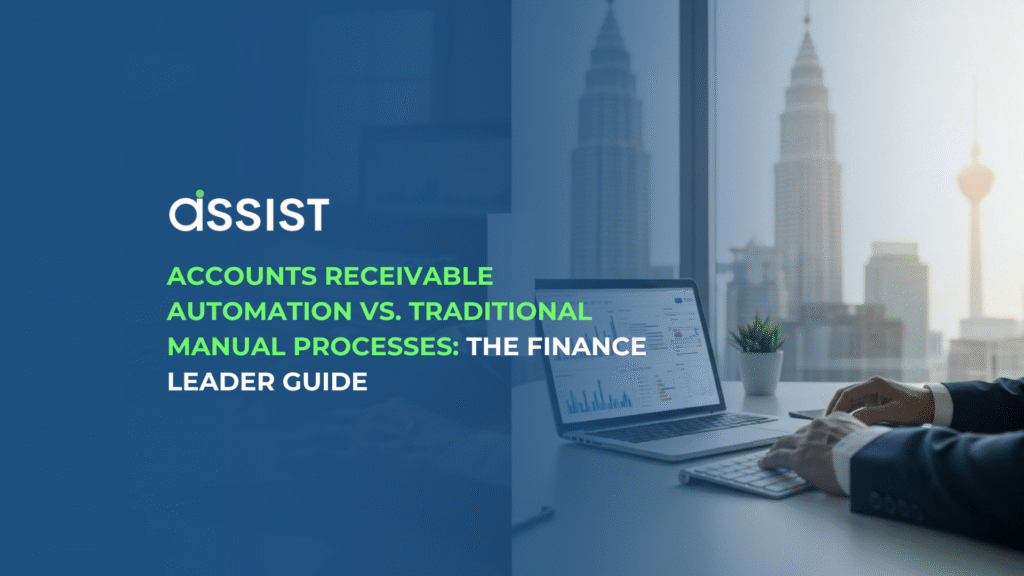

To summarize the choice between accounts receivable automation and traditional manual processes: automation replaces labor-intensive data entry with AI-driven precision, reducing Day Sales Outstanding (DSO) by up to 30 percent while ensuring 100 percent compliance with regional mandates like LHDN e-invoicing. While traditional manual processes rely on spreadsheets and physical paperwork that are prone to human error and high operational costs, automation offers a scalable, transparent, and audit-ready framework. Let us explore the technical and strategic differences in detail to understand why modernizing your finance department is no longer optional.
The High Cost of the Status Quo
In the high-growth corridors of Singapore, Malaysia, and the wider region, finance leaders are facing a reckoning. For decades, the manual status quo was considered just another cost of doing business. But as digital mandates accelerate, staying traditional is becoming a liability.
If you have walked through a finance department lately, you have likely seen the symptoms of manual AR: stacks of invoices, frantic emails chasing payments, and the spreadsheet of truth that everyone is afraid to edit. In our region, where business moves at lightning speed, this friction is a silent profit killer. Many leaders are beginning to realize how bookkeeping AI is changing the way you do business, moving us away from reactive accounting and toward proactive strategy.
The Anatomy of Traditional Manual AR
Traditional AR is a labor-intensive cycle. It begins with the physical or digital receipt of data, followed by manual entry into an ERP or accounting software. This is where the human factor becomes a risk. Fat-finger errors, missed emails, and misplaced physical documents lead to a Collection Effectiveness Index (CEI) that would make any CFO lose sleep.
Beyond the numbers, there is a human cost. Clerks spend 70 percent of their time on data entry rather than analysis, leading to burnout. Understanding the foundational difference between accounts payable and accounts receivable is the first step, but the second step is realizing that manual management of both is no longer sustainable for a growing SME.
Defining AR Automation Beyond Just Digital Invoices
Automation is often misunderstood as simply sending PDFs via email. In reality, true automation involves sophisticated OCR technology that reads and extracts data with near-perfect accuracy.
In our regional context, this is about compliance. Whether it is the InvoiceNow network in Singapore or the upcoming LHDN e-invoicing requirements in Malaysia, automation ensures that your data is formatted correctly for the government and your partners simultaneously.
Side by Side Comparison: Manual vs. Automated
To truly understand the value, we must look at the two processes side by side:
- Speed and DSO: Manual processes often result in Day Sales Outstanding (DSO) that lag by 45 to 60 days. Automation sends reminders and reconciles payments instantly, often reducing DSO by over 30 percent. This is why automated bookkeeping software helps businesses drive growth by freeing up the cash flow previously trapped in pending status.
- Data Accuracy: A human clerk will eventually make a mistake. An AI-driven system does not get tired. It flags duplicates and ensures every cent is accounted for.
- Scalability: If your business grows by 50 percent next year, a manual process requires a 50 percent increase in headcount. An automated process simply scales with your volume, keeping overhead flat.
The Factor of Why Modern Finance Needs Trust
From an auditor’s perspective, manual spreadsheets are a nightmare of conflicting information. In the world of modern finance, trust is built through transparency. Automated systems provide an immutable audit trail where every change, approval, and payment is logged.
As we look at how AI will impact accounting, we see that the auditor’s job becomes easier and the business’s reputation becomes stronger. You move from guessing your cash position to knowing it with certainty.
Transitioning without the Turmoil
The biggest fear for finance leaders is often the transition. No one wants to stop operations to install a new system. This is why modern solutions focus on seamless integration. By integrating with Xero or QuickBooks, automation becomes an invisible assistant rather than a disruptive overhaul. You can even personalize your Assist experience to recognize specific vendor patterns unique to your business.
The Final Verdict
The debate between manual and automated is over. In a market where e-invoicing is becoming the law of the land, manual processes are no longer a viable alternative; they are a risk. To stay competitive, you need a system that thinks ahead. Experience the future of finance by exploring the full suite of Assist solution features and benefits. Don’t let manual errors hold back your growth. Register for using Assist solution and try it for free today and see how easy the transition to modern AR can be.